

Florence and its surroundings are certainly one of the favourite destinations for travellers. If Florence represents one of the most beautiful cities in the world, the province not only enjoys reflected light but also represents one of the most beautiful and richest places to visit.
Choosing among the villages near Florence or the many points of interest that characterize the province is extremely difficult. Art, history, nature, sports, food and wine tours, adventure or fun: nothing is missing in the surroundings of Florence. These places can be easily reached by public transport or by private car.
In this guide, you can find ideas on things to see near Florence with ideas for an excursion or a trip out of town during your next holiday in Tuscany.
Plan visits departing from Florence. They range from the most popular destinations to lesser-known villages full of priceless treasures.
We hope you enjoy our selection and invite you to leave comments and questions at the bottom of this article. Our concierge will be happy to answer.
Siena
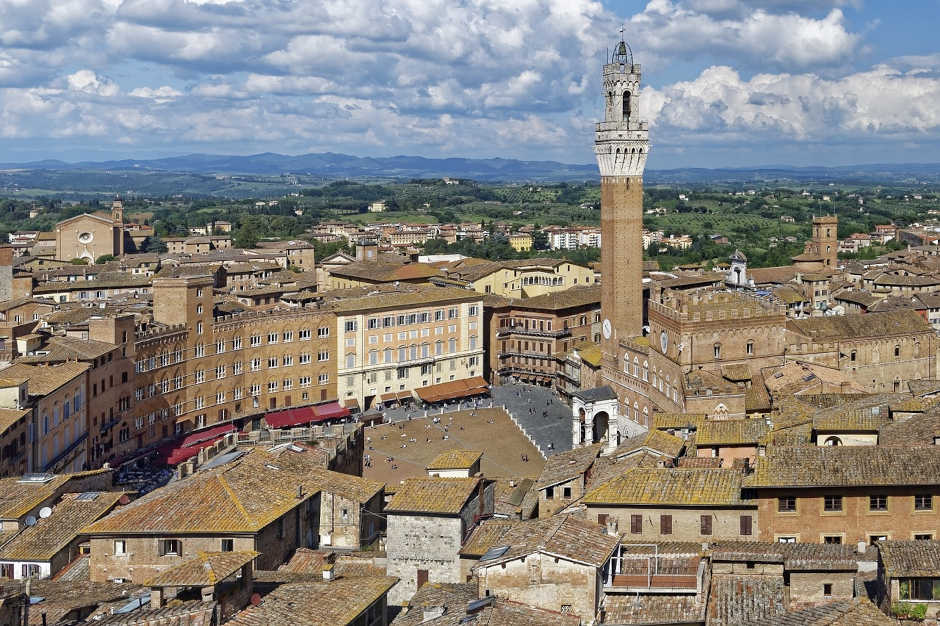
71 km away – about an hour by car from Florence (about an hour and a half by bus – there is no railway station).
A destination can be easily visited on foot because the sights of Siena are all within easy reach. Not to miss: the famous Piazza del Campo where the Palio di Siena takes place, the Palazzo Pubblico with the Civic Museum of Siena inside, the Torre del Mangia with a breathtaking view from the top of its 88 meters high, the Cathedral of Siena, the Museum of the Opera del Duomo di Siena which is accessed from the right of the Duomo, the Baptistery of Siena located behind the Duomo, the Pinacoteca Nazionale di Siena with important paintings.
The villages and sites of artistic and cultural interest in the province of Siena are a valid alternative for a day trip from Florence.
San Gimignano
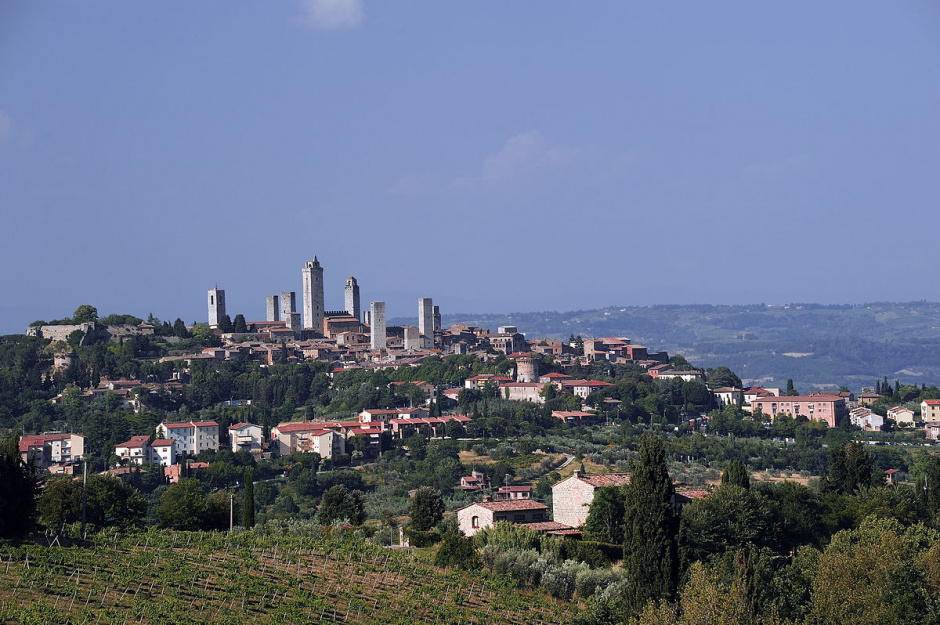
About an hour’s drive from Florence – 53 km – to be reached by bus or car.
It has been called the Manhattan of the Middle Ages for its extraordinary skyline made up of 72 towers (of which only 13 remain today) and is the perfect destination if you are looking for panoramic places near Florence.
To visit:
The Cathedral of San Gimignano with its simple facade but with important works inside and the wonderful Chapel of Santa Fina da San Gimignano with frescoes by Ghirlandaio,
The Piazza del Duomo with the Palazzo del Popolo, which houses the Civic Museum of San Gimignano. Moreover:
In the same square you can admire and visit the Torre Grossa, the Loggia del Comune, the Torre Rognosa. The Chigi Tower, the Salvucci and Ardinghelli Towers;
the Piazza della Cisterna on the top of the town with its octagonal well in the center and the presentation of the unmissable Gelateria Dondoli, known all over the world and award-winning;
The Church of Sant’Agostino with the frescoes by Benozzo Gozzoli and the Rocca di Montestaffoli, almost completely destroyed, but a privileged panoramic view.
Pisa
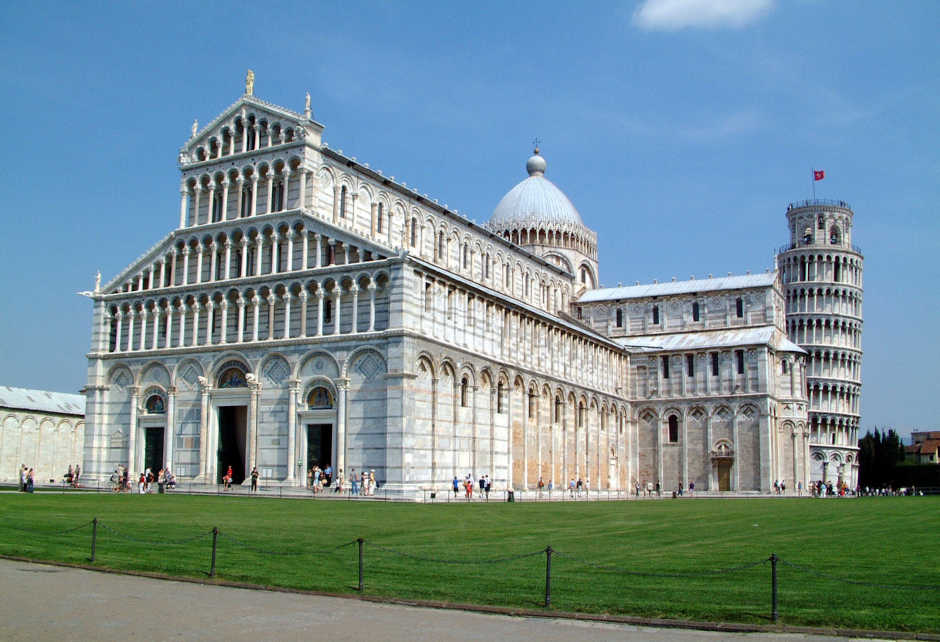
At about 83 kilometres from Florence (75 minutes by car or train).
The ancient Maritime Republic is known throughout the world for its Leaning Tower.
To discover Piazza del Duomo with the architectural complex of Campo dei Miracoli which collects the main monuments of the city:
– the Leaning Tower of Pisa which leans because the ground has already given way in the early stages of construction but which will never fall because the vertical axis that passes through its centre of gravity falls into the support base;
– The Cathedral of Santa Maria Assunta or Cathedral of Pisa in Romanesque style;
– The Baptistery of Pisa by the architect Diotisalvi and works by Nicola Pisano and his son Giovanni;
– The Monumental Cemetery of Pisa where illustrious Pisan personalities are buried is a sacred place because the crusaders brought the holy land here from Mount Golgotha, just outside Jerusalem.
We also recommend visiting:
– the Lungarni of Pisa including, the best known, the Medici Lungarno with important historical buildings and the Lungarno Gambacorti with the Gothic church of Santa Maria della Spina;
– Piazza dei Cavalieri where there are the Palazzo della Carovana, seat of the Scuola Normale di Pisa, the Canonica, the Palazzo del Consiglio dei Dodici, the church of Santo Stefano and that of San Rocco and in the centre of the square the statue of Cosimo I;
– The Murales by Keith Haring “Tuttomondo” a few meters from the Pisa station;
– Borgo stretto, characteristic street in the centre with arcades and shops and Borgo largo (Piazza del Pozzetto).
Lucca
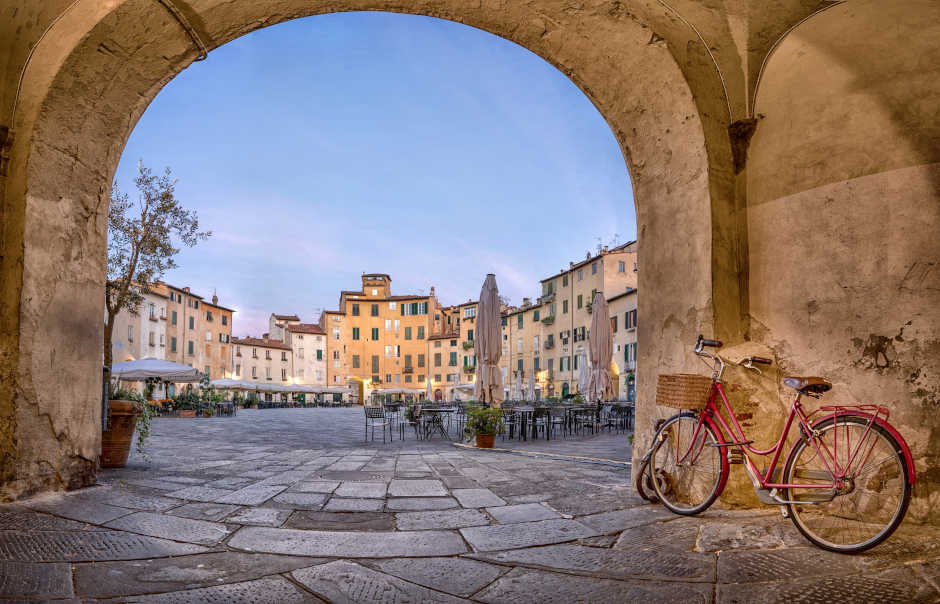
It is 81 km from Florence (about 1 hour by car and about 1 and a half hours by public transport).
Characteristic city known for the Renaissance walls that surround the historic centre. We advise you to visit:
- Piazza dell’Anfiteatro, one of the most beautiful squares in Italy, built on an ancient Roman amphitheatre;
- the Cathedral of Lucca dedicated to San Martino with important works of art, some of which were created by Tintoretto and Ghirlandaio;
- The walls of Lucca from which you can admire a beautiful panorama of the city. These are very wide tree-lined avenues that surround the historic centre where you can walk or play sports;
- Torre Giunigi and Torre delle Ore, the only two medieval towers still existing in Lucca. Both can be visited, with over 200 steps to reach the top from which you can admire a beautiful panorama. On the Giunigi Tower there is a hanging garden and in the Torre delle Ore you can admire an ancient clock with manual winding;
- Piazza Napoleone, the largest square in Lucca where the Palazzo Ducale stands. It is used in the summer to host many concerts of the Lucca Summer Festival;
- The National Museum of Palazzo Mansi with works by Van Dick, Pontormo, Bronzino, Tintoretto and many others.
The Cinque Terre

Many visitors to Florence choose the Cinque Terre as a destination for a day trip. This is the most fascinating stretch of coast in Liguria, with characteristic villages suspended between sea and land, reachable by train or by car in about 2 hours. Among these:
- Riomaggiore with its typical coloured houses and the starting point of the Via dell’Amore, a pedestrian path carved into the rock that leads to Manarola;
- Manarola with colourful houses on top of a cliff, with ancient monuments and churches to visit and breath-taking viewpoints;
- Corniglia also stands on a cliff that is centre meters high and inaccessible from the sea. The small village that deserves to be visited is accessible by a brick staircase or by a single road that leads from the station to the town;
- Vernazza, a medieval village with characteristic alleys, colourful houses, a beautiful marina, ancient religious and civil monuments;
- Monterosso with its historic centre and the largest beach in the Cinque Terre, in Fegina.
The Chianti
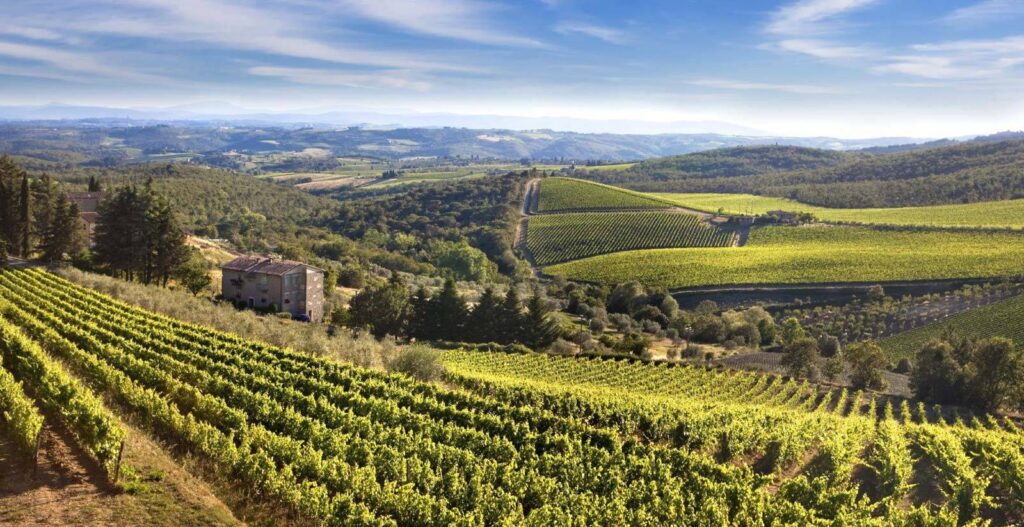
Another idea on what to visit near Florence is Chianti, an area not far from the Florentine capital, known for its important production of wines known throughout the world. The Chianti hills are an unmissable destination for those who want to enjoy an enchanting countryside landscape not far from Florence. Many visitors choose Chianti to visit the famous cellars and wineries and for wine tastings or to admire the hilly landscape, very pleasant to cross both by car and motorbike. For an “alternative” excursion, we suggest a tour in Chianti in a vintage car.
Do not miss the small historic villages of Chianti Classico (the one between Florence and Siena) such as Greve in Chianti, Panzano in Chianti, Radda in Chianti, Castellina in Chianti, Gaiole in Chianti or Castelnuovo Berardenga.
The Mall Florence Italy
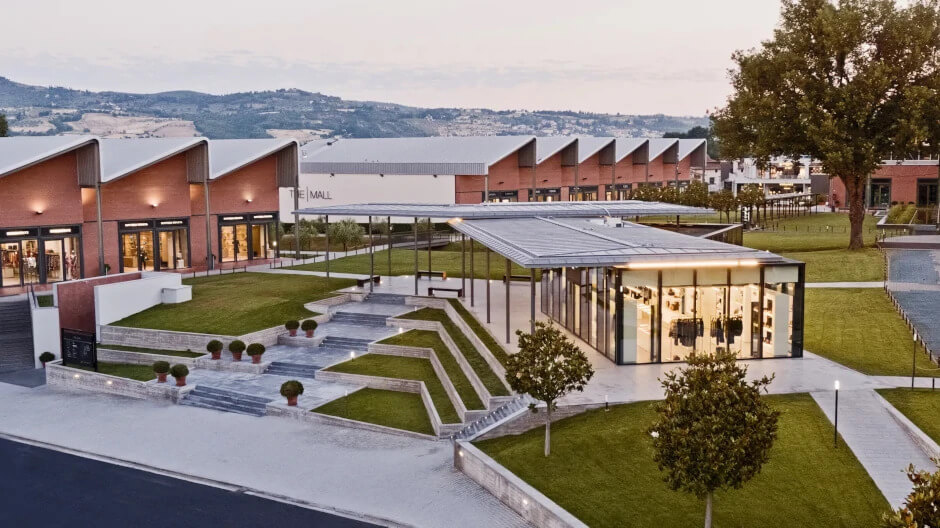
About 39 kilometres from Florence and reachable by car in about 40 minutes or by bus from Florence in about 55 minutes. It is located in the locality of Leccio, in the municipality of Reggello.
An outlet that houses the shops of prestigious Italian and international brands. It is a fun alternative to the artistic and cultural proposals of the surroundings of Florence, to spend a pleasant day of shopping. At the moment, shops are open Monday to Friday from 10am to 7pm, due to Covid restrictions.
Other ideas on towns to visit near Florence, perhaps less known but extremely fascinating, are:
Certaldo
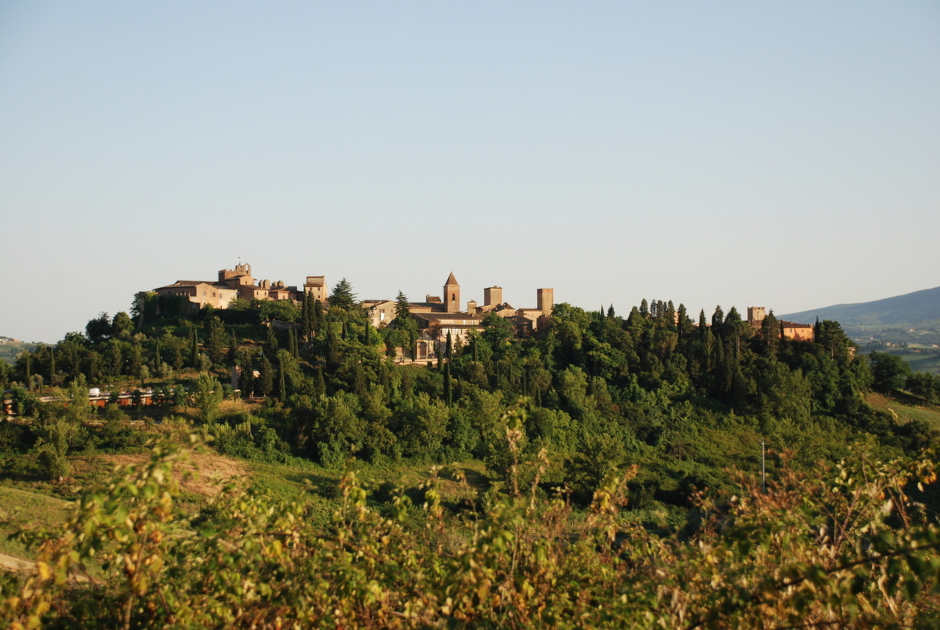
At 42 km from Florence, reachable by car or by private transfer in about 50 minutes.
Certaldo is the city that gave birth to the well-known writer Giovanni Boccaccio and a centre of great artistic and cultural value.
Born from the Etruscan-Roman encampments, it became an important part of the militarized belt that protected the territory of Florence during the Middle Ages: the development of the city and the castle had a significant boost with the movement of the Via Francigena which reached the bottom of the valley at the foot of Certaldo.
The most interesting part is certainly Certaldo Alta where you will have the opportunity to visit a typical and perfectly preserved medieval town, walking through its narrow streets and small and characteristic squares. The main point of interest is certainly Via Boccaccio, famous for being the centre of the social life of the time and for hosting the home of the famous writer of the same name. We must not forget the Palazzo Pretorio and the mighty walls from which you can enjoy a suggestive view of the entire valley below and from which you could even see the distant towers of San Gimignano.
Vinci
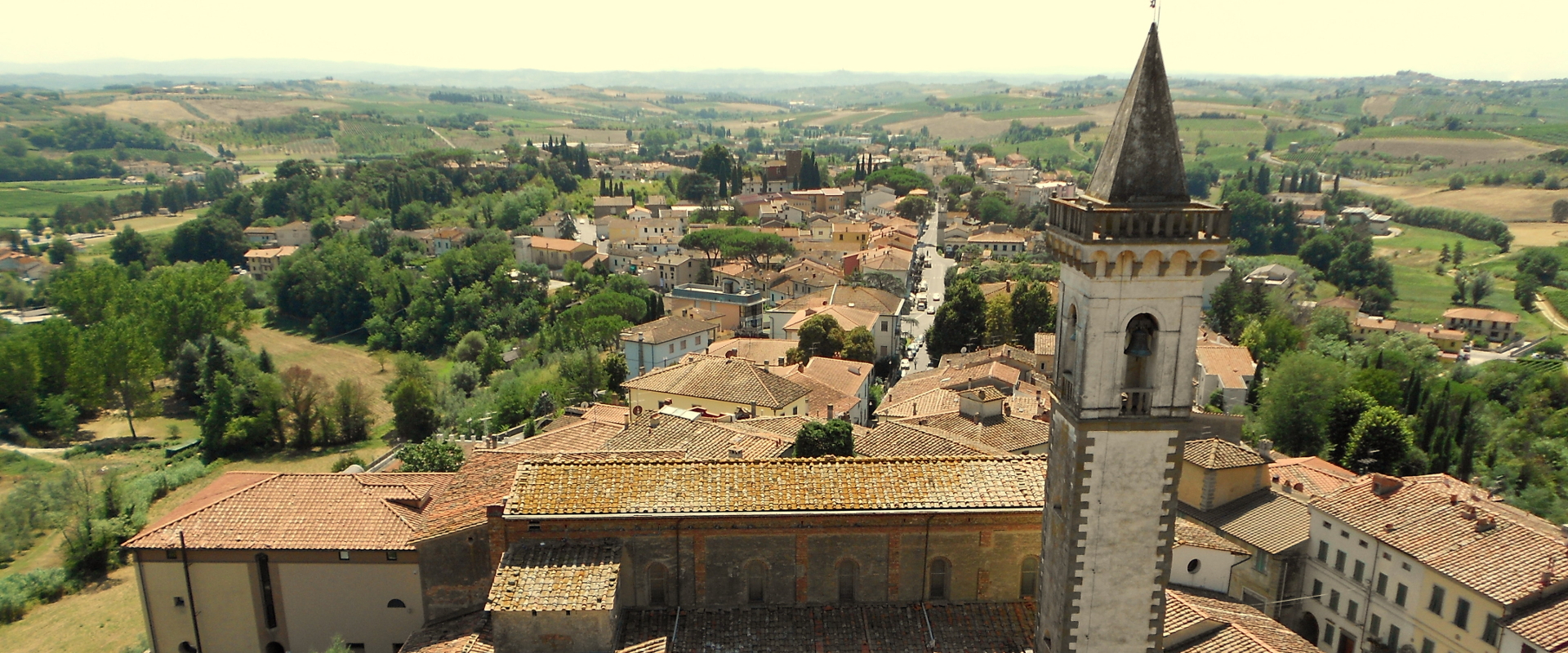
It is also 42 km away from Florence, reachable by car or by private transfer in about 50 minutes.
Vinci is famous for being the birthplace of Leonardo, and where you can discover, in addition to the typically medieval beauty of this Tuscan village, the artist-inventor’s house and the museum where you will find reproductions of Leonardo’s machines.
Fiesole
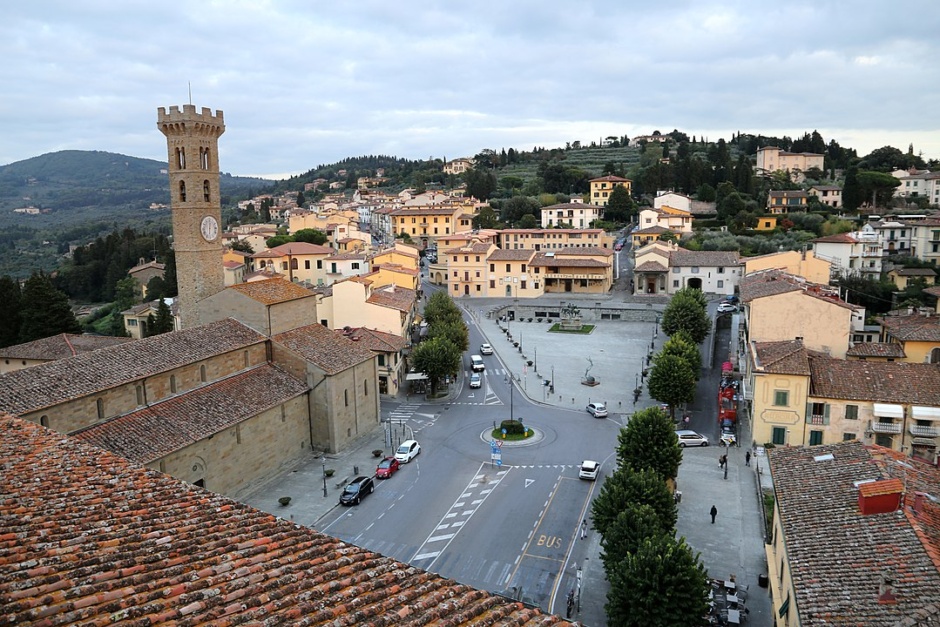
Ideal for a trip out of town, Fiesole is at just two kilometres away from the city centre and for years it has boasted the title of “the richest municipality in Tuscany”.
It rises on a hill, behind the capital and it offers a breathtaking view of Florence.
Particularly captivating are the paths in nature, between the woods and the hills.
A great impact also have the monuments and testimonies of Fiesole’s past: the city has its roots in the Etruscan world. Later, it became a rich Roman colony. And it seems that the Florentia city originated from this settlement.
Among the most beautiful locations to visit we mention the private parks and noble villas, the historic medieval buildings, the monumental gardens of Villa Peyron, the Fontelucente wood, the terraced wood of Villa Medici, the Cathedral, the Badia Fiesolana, the Convent of San Francesco, the Archaeological Museum, the Bandini Museum.
Very interesting is the archaeological area, born at the end of the nineteenth century, when the works brought to light the first remains of the Roman theatre.
Subsequently, the large swimming pools of the thermal building and the internal part with heated rooms, tubs and the Etruscan Roman temple were found.
The Archaeological Area is completed by the Archaeological Museum, in the shape of a Tuscan temple. Inside it are kept the main artefacts found in the area. These finds cover a decidedly broad period of time, because they cover proto-history, Etruscan, Roman, Longobard civilizations, the Middle Ages.
Inside it we also find an antiquarian section with bronzes, marbles and sculptures, as well as the Costantini Collection, with Greek, Magna Graecia and Etruscan ceramics.
Arezzo
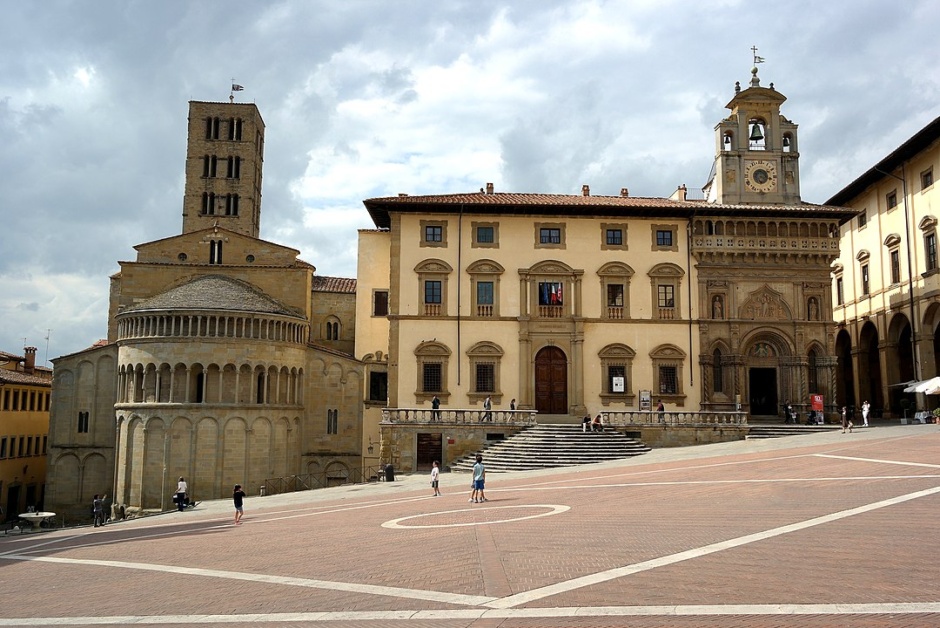
Just over an hour’s drive from Florence, one of the most beautiful cities of art in Tuscany. Giorgio Vasari and Piero della Francesca were born here, whose artistic and architectural legacies are still visible in the city.
Arezzo is a destination that is rarely taken into consideration in the more classic itineraries of the region, but it is rich in works of art and landscapes of great appeal.
It was the birthplace of prominent personalities such as Francesco Petrarca, it is full of green parks and squares and churches that house one-of-a-kind artistic masterpieces.
The most important scenes of Roberto Benigni’s film “Life is beautiful” were filmed here.
The city is divided into a historic part, located on a hill, and a younger and more commercial part, located below and full of shops and clubs.
Let’s find out what to see in Arezzo:
- Piazza Grande: it is the centre of city life. It has a very particular trapezoid shape and it is inclined to facilitate the passage of rainwater. Historic buildings from different eras overlook it: medieval, Renaissance, fifteenth century. Among the most beautiful buildings are the Loggiato Vasariano, the Pieve di Santa Maria, the Palazzo della Fraternita dei Laici;
- Loggiato Vasariano: in Piazza Grande we find the imposing building designed by Vasari and built in the second half of the sixteenth century. It is considered one of the most important works of the architect. Today, its characteristic portico welcomes restaurants and bars with tables;
- Palazzo della Confraternita dei Laici: it combines and blends three architectural styles and three different eras. Gothic, Renaissance and sixteenth-century style meet together in a building that now houses the Fraternity Museum, with a valuable collection of works of art. On the bell tower we find the clock added during the sixteenth century and made by Felice da Fossato. It is considered a true watch making masterpiece. Even today it marks the time, day and lunar phases according to the Ptolemaic conception of the universe;
- Church of Santa Maria della Pieve: between Corso Italia and Via dei Pileati we find a Romanesque church with a façade and three portals. Built between the twelfth and fourteenth centuries, it overlooks Piazza Grande and it houses precious works, such as the Polyptych by Pietro Lorenzetto and the relics of San Donato;
- Medici Fortress: this defensive stone construction stands in the north-eastern part of the city. It is located on the Colle di San Donato and it was built during the sixteenth century at the behest of the Medici. It has a five-pointed star appearance and ramparts of different heights. Inside it, today we find one of the most beautiful and popular public parks in the city.
Pistoia
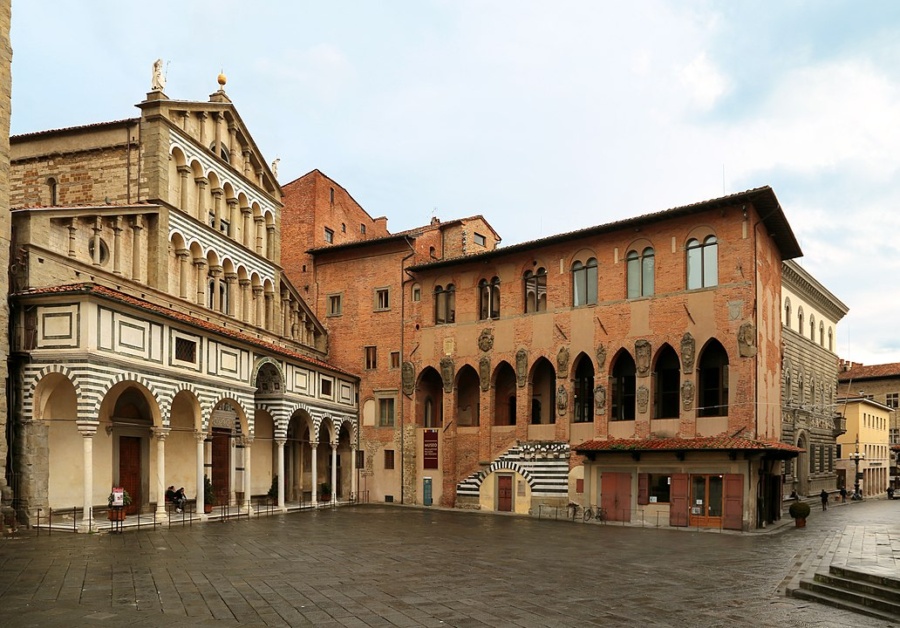
At just over thirty minutes by train from Florence, here is the Italian Capital of Culture 2017. A city that boasts countless artistic and architectural beauties and is easy to navigate because it is not particularly large.
It is perfect for slow tourism, as it is not overcrowded by tourists.
Let’s find out what to see in Pistoia:
- Piazza del Duomo: it is the main square of the city. Definitely less frenetic than the main squares of the big Tuscan cities, it conquers for the harmony of its architectural elements. It is particularly important because here we find the symbols of religious and civil power. The Cathedral, the Bishop’s Palace, the Baptistery, the Palazzo del Podestà, the Palazzo degli Anziani where the town hall is located overlook it;
- Duomo: the San Zeno Cathedral is the most important religious building in the city. It is a Romanesque style church with a polychrome stone facade and a characteristic portico. Inside it there are the relics of San Jacopo but also works of art such as the statues of San Zeno and San Jacopo, the Crucifix of Coppo di Marcovaldo, the Dossale, the tomb monument of Cino da Pistoia;
- Bell tower: built as a defence tower in the Longobard era, it has been modified several times over the centuries and it blends three different styles such as that of the Longobard era, the Pisan one and the Pisan-Lucca one. It is 67 meters high and it is one of the most important vantage points to admire the city from above;
- Baptistery of San Giovanni in corte: it is in front of the Cathedral and almost in the centre of the square. It has an octagonal shape and dates back to the fourteenth century. It has a detailed exterior and a simpler interior.
Anghiari
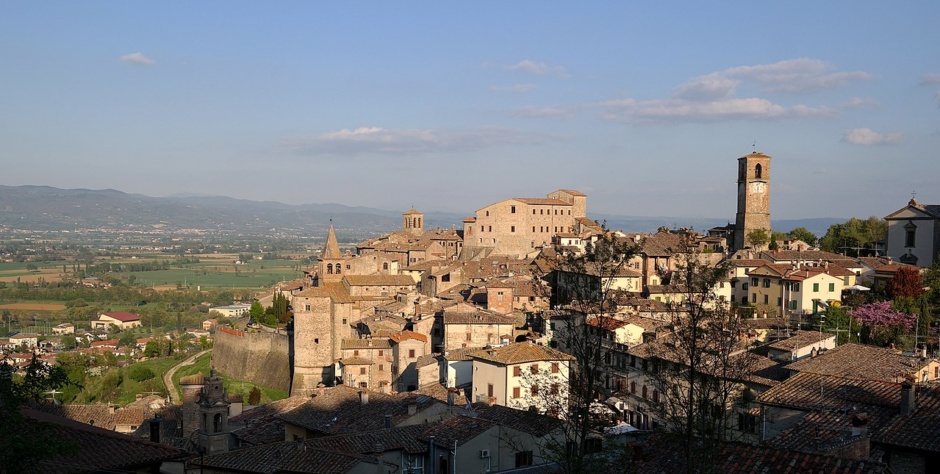
It is one of the most beautiful villages in Tuscany, located almost on the border with Umbria and famous for the battle fought between the Republics of Florence and Milan.
Anghiari is included in the “most beautiful villages in Italy” circuit and boasts the Orange Flag of the Touring Club.
Let’s find out what to see in Anghiari:
- Palazzo Pretorio: the Town Hall is an ancient fourteenth century building, the first part of the city. On the facade we find the coats of arms of the podestà who administered the city on behalf of the Florence Republic, while on the first floor we find a fifteenth century fresco by Antonio di Anghiari;
- Castello di Montauto: it is a medieval structure owned by the Barbolani family, built at the end of the twelfth century. Rebuilt around the mid-sixteenth century, it boasts numerous Renaissance and nineteenth -century elements. From 1224 to 1503 it kept the habit of San Francesco d’Assisi;
- Museum of the Battle of Anghiari: in Palazzo Marzocco located in Piazza Mameli we find this museum which exhibits collections ranging from prehistory to the eighteenth century. Inside there are stone tools of the Neanderthal man, Roman sculptures, firearms created in the period of the French Revolution.
Prato
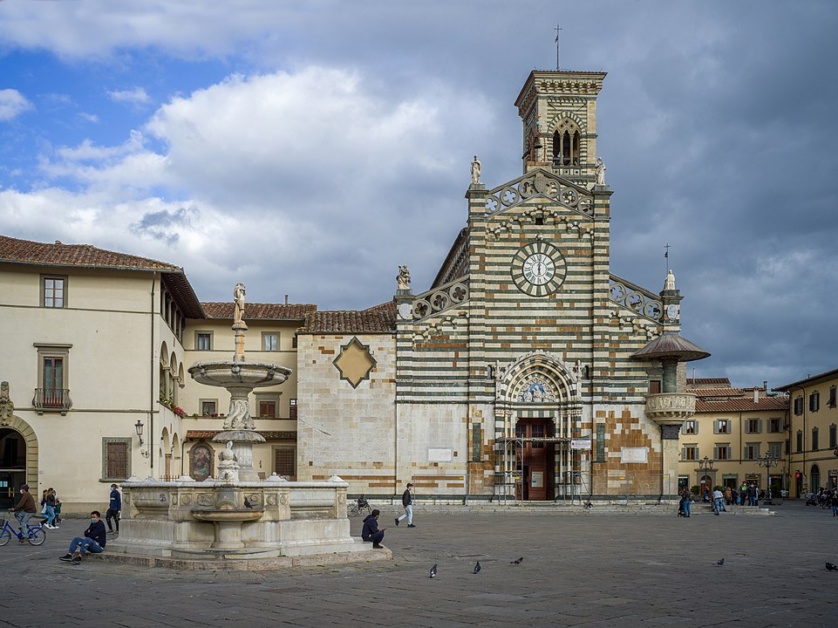
In less than thirty minutes by train from Florence we reach one of the most beautiful and elegant cities in Tuscany, with an enchanting historic centre and numerous corners to admire.
Let’s find out what to see in Prato:
- Duomo: the Cathedral of Santo Stefano is one of the oldest churches in the city and the main place of worship. It boasts a thirteenth-century facade partially restored in Gothic style, an imposing bell tower and a Donatello’s pulpit. Inside it, we can admire a cycle of frescoes by Filippo Lippi;
- Basilica of Santa Maria delle Carceri: dating back to the fifteenth century, it has an external structure in clear, decidedly simple stone, a Greek cross and a small dome. Inside it there are paintings and frescoes;
- Church of San Domenico: the greatest peculiarity lies in its external facade, currently unfinished. Of great appeal are the bell tower, the decorative motifs and geometric paintings. It was built in the thirteenth century;
- Museo dell’Opera del Duomo: it is one of the most important museums in Prato. Founded in 1967 in the halls of the Bishop’s Palace, it exhibits works from the Cathedral of Santo Stefano. Inside it we find seven rooms that present works in chronological order. Among the works: paintings, statuettes, sculptures, religious objects.
Luigi Pecci Centre for Contemporary Art
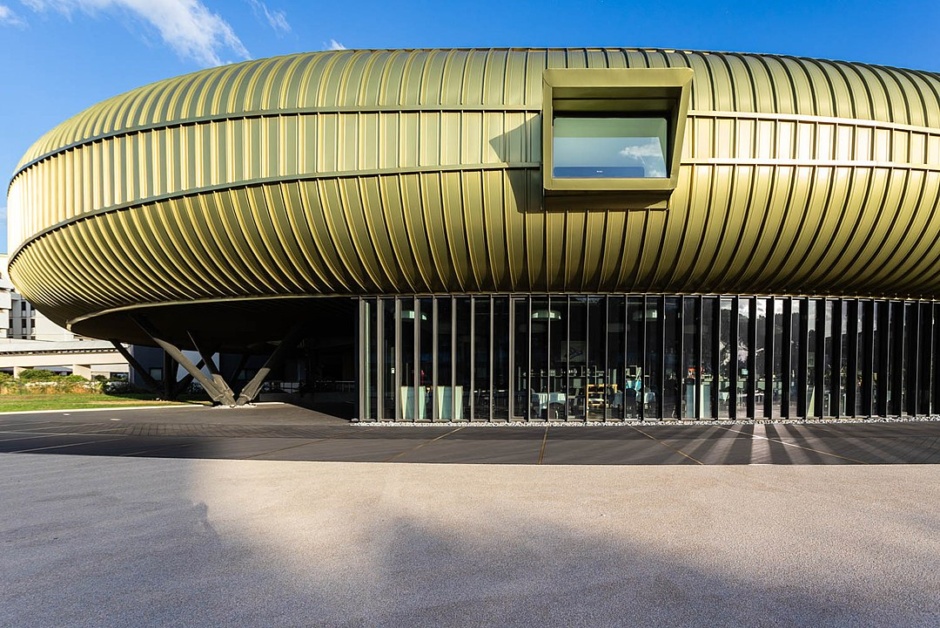
The multifunctional centre is in Prato and it was created with the aim of collecting, enhancing and preserving contemporary works of art.
The museum boasts over 3000 m2 of exhibition halls, an archive, a specialized CID/Visual Arts library with 60,000 volumes, an auditorium-cinema, a bookshop, a restaurant, a bistro and an open-air theatre.
The collection includes over a thousand works, including sculptures, installations, environments, paintings, video works all created from the 1950s to the present day.
Inside are works by Arte Povera, the Transavantgarde, by artists of the former USSR, by Vito Acconci, Nobuyoshi Araki, by Stefano Arienti, Paolo Canevari, Loris Cecchini, Enzo Cucchi, Jan Fabre.
San Quirico d’Orcia
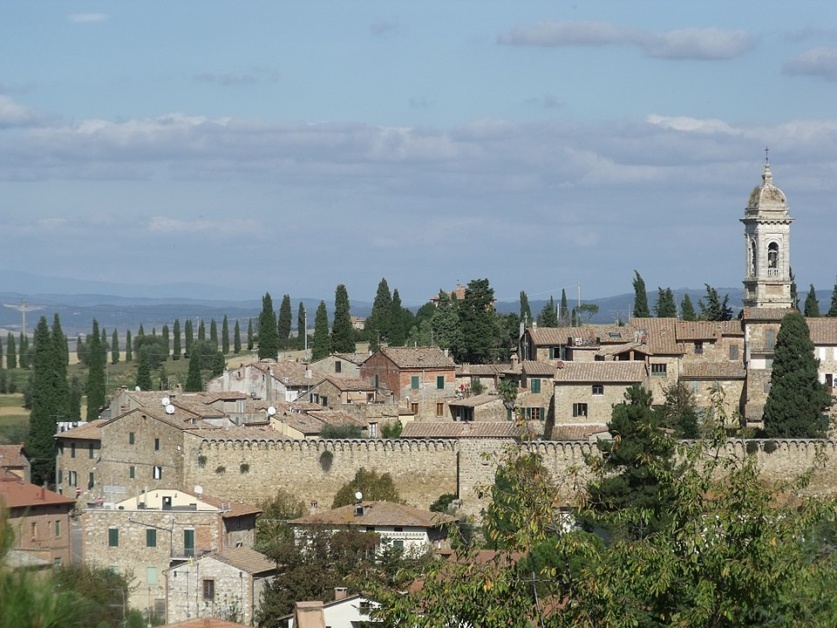
In the heart of the Tuscan countryside, in Val d’Orcia and in the province of Siena. Here is a small town, with just 2,500 inhabitants but one of the most fascinating in the entire region because it is full of charm and an excellent starting point for exploring the whole Val d’Orcia. It is the visual quintessence of Tuscany. It boasts numerous locations which alone could be chosen to represent the region and what it communicates to the outside world.
Let’s find out what to see in San Quirico d’Orcia:
- The historic village: the village is completely pedestrian, with stone houses and small streets. The most beautiful thing to do here is to get lost in its alleys to admire the purest and most characteristic part of the village;
- Pieve dei Santi Quirico e Giulitta: also known as the collegiate church of San Quirico, it is a large Catholic church in Romanesque style on the outside and Baroque on the inside. It was built starting from the twelfth century and it boasts a Latin cross plan with a single nave, works of art and three external portals;
- Cypresses of San Quirico: along the Via Cassia from the centre of the village and driving for about 6 km in a north-easterly direction we reach the famous cypresses of San Quirico. It is a row of cypresses placed on a small hill in the locality of I Triboli. Over the time they have become the symbol of the Val d’Orcia, photographed and inserted in videos and postcards;
- Chapel of the Madonna di Vitaleta: we take the SP146 and arrive at this small chapel in the open countryside. It is a private church of Renaissance origin renovated during 2021;
- Horti Leonini: in the centre of San Quirico d’Orcia we find the Italian garden of the Horti Leonini, dating back to the sixteenth century. The gardens are divided into two parts: the upper one which is more natural and the lower one, enclosed by walls and holm oaks and with triangular flowerbeds.
Monteriggioni
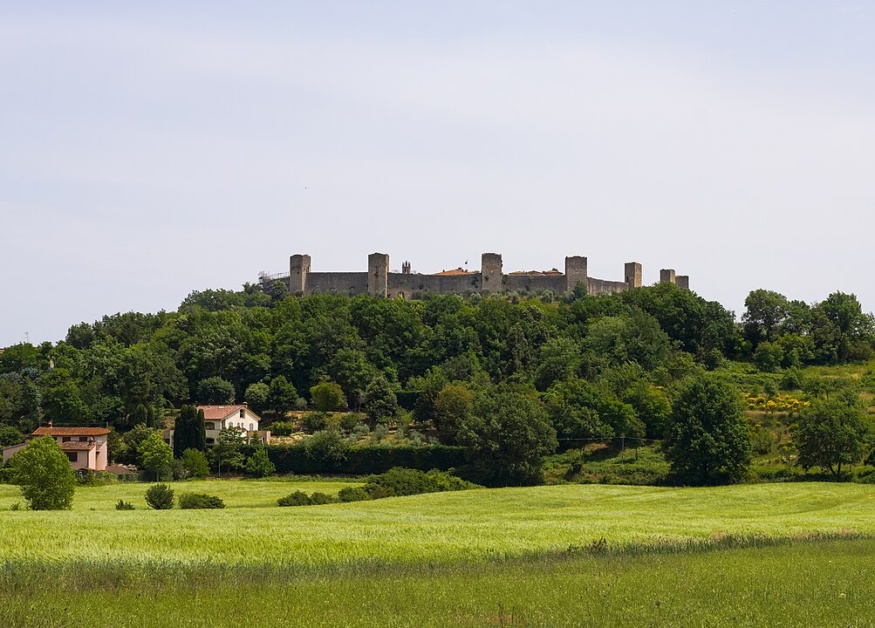
Located on top of a hill in the Siena countryside, Monteriggioni is surrounded by perfectly preserved circular walls.
It is one of the most beautiful villages in Tuscany, one of the unmissable places during a holiday in the region.
Let’s find out what to see in Monteriggioni:
- Historical centre: small and characteristic, it has an almost circular shape and a diameter of just 170 metres. A few streets and a few buildings give life to a location with a unique charm and enveloping atmospheres, capable of transporting us to another era;
- The Walls: elliptical in shape and 2 meters thick, they are interspersed with 15 towers and 2 gates. We can walk on two walkways and admire splendid views over the Siena countryside;
- The gateways to the city: Porta Franca and Porta Fiorentina are the two main access areas to the village and they are located in the East and West areas;
- Church of Santa Maria Assunta: overlooking Piazza Roma, it is a small church dating back to the beginning of the thirteenth century. It has a stone facade in Romanesque style, a central door with an arch and rose window, a barrel vaulted roof, a nave and few internal ornaments. We can admire two tabernacles and a painting of the Madonna by Lippo Vanni. On the back we find the bell tower with a square plan and dating back to the eighteenth century;
- Pieve di Santa Maria a Castello: it is 20 minutes from the village. It is a particularly ancient church, consecrated as early as 971. Today, it has undergone numerous changes. It boasts a simple facade, with a late medieval portal and an oculus opening. Inside there are neoclassical decorations and two large rectangular windows.
Barberino Val d’Elsa
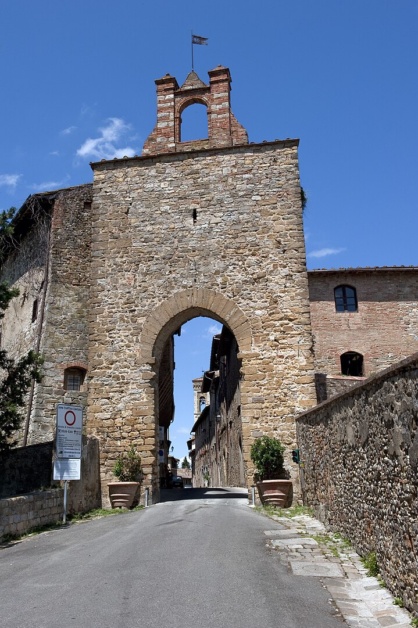
Between Florence and Siena, we find a village rich in history, with a medieval historic centre, numerous valuable architectural testimonies, two characteristic access doors and a dome identical to that of Brunelleschi but five times smaller.
Let’s find out what to see in Barberino Val d’Elsa:
- Antiquarium of Sant’Appiano: it is a small archaeological museum which houses a part of the finds discovered in the excavations carried out in the surrounding areas. Inside it, there are funerary urns in alabaster from the Hellenistic period, Attic ceramics with red figures, a series of late medieval and Renaissance ceramics, a pagan idol in sandstone depicting the god Eros riding an animal;
- Pieve di Sant’Appiano di Barberino Val d’Elsa: inside it we can admire two different versions of the Romanesque, the Proto-Romanesque and a later version of the same style. On the walls of the church we can admire frescoes of the Florentine school from the last period of the fifteenth century and frescoes from the sixteenth century on the vault of the bell tower and in the Chapel of the SS. Sacrament.

Articoli correlati
 Things to Do in Florence: our bucket list for your pleasure
No matter how long you are going to stay in town or who you are going with: there are several mus ...
28 Jun 2018
 Firenze Card and Firenze Card+
With Firenze Card access to museums and gardens of Florence for 72 hours …
...25 Aug 2020
 Basilica of San Marco in Florence
The Basilica of San Marco in Florence is one of the most important churches in the historic city ...
4 Jul 2023
